Introduction
Welcome to the definitive, deep-dive technical guide by Gas Care by Stove-Technica. We are dismantling the outdated norms of Indian kitchen design. If you are investing heavily in a modular kitchen or building a premium home in Kerala, this multi-part audit will explain the exact physics, material science, and economics behind moving your LPG cylinder outside.
Outdoor LPG Pipeline Masterclass: Copper vs Jindal MLC
Walk into any high-end modular kitchen showroom today, and you will see seamless acrylic cabinets, soft-close Blum hardware, and imported quartz countertops. Yet, beneath this ₹5 Lakh aesthetic, thousands of homeowners are still hiding a 14.2 kg, highly pressurized steel cylinder connected by a vulnerable rubber hose.
This is an architectural contradiction. Storing an LPG cylinder indoors is no longer just a minor inconvenience; it is a critical safety liability and the fastest way to ruin your expensive interior finishes.
In first part of this masterclass, we will break down the precise physics of indoor gas accumulation.
The Physics of the “Invisible Pool” (Why Indoor LPG is a Ticking Time Bomb)
To understand why modern building codes and Resident Welfare Associations (RWAs) are mandating outdoor cylinders, you must understand the basic chemical behavior of Liquefied Petroleum Gas (LPG).
Unlike natural gas (which is lighter than air and dissipates upward), the LPG supplied by Indane, Bharat Gas, or HP is a mixture of propane and butane. LPG is roughly 1.5 to 2 times heavier than air. Here is what happens when a micro-leak occurs inside a closed kitchen cabinet:
- The Pooling Effect: The escaping gas does not float up and out of your chimney or exhaust fan. Instead, it sinks directly to the floor.
- The Invisible Hazard: It pools in the lowest corners of your kitchen, flowing under cabinets and behind appliances, creating an invisible, highly explosive layer just above your floor tiles.
- The Ignition Trigger: Because it pools low to the ground, it only takes a spark from a refrigerator compressor kicking on, a dropped appliance, or a floor-level electrical socket to trigger a catastrophic volumetric explosion.
The Outdoor Solution: By moving the cylinder to a permanent Outdoor Gas Cage on a well-ventilated exterior wall, you completely neutralize this threat. Even if a valve fails and a major leak occurs, the heavy gas immediately disperses into the open outdoor breeze. It can never pool, and it can never reach the critical concentration required for ignition inside your living space.
The Material Science of Survival: Defeating the Kerala Climate
Building a home means engineering for extremes. Our heavy monsoons and relentless high humidity create an incredibly corrosive environment. If a contractor suggests using cheap Mild Steel (MS) piping for your gas line, they are setting you up for failure. MS pipes rapidly oxidize, leading to microscopic pitting, rust, and eventual gas leaks.
At Gas Care, we rely exclusively on two BIS-compliant architectural materials engineered to survive the coastal and tropical climate for decades:
The Heavyweight: High-Temperature Brazed Copper
Copper is the undisputed gold standard for luxury villas and new constructions.
- The Patina Defense: When exposed to humidity, copper naturally develops a thin, protective oxide layer (a patina) that completely halts further corrosion. It is immune to the rusting that plagues steel.
- Molecular Fusion: Copper pipes are not just screwed together. Our technicians use high-temperature brazing torches to melt a filler metal into the joints. This creates a molecular bond, meaning the pipe and the joint become one continuous, indestructible piece of metal that is 100% leak-proof.
The Modern Marvel: Jindal MLC (Multi-Layer Composite)
If you are retrofitting a gas line into an existing, fully furnished apartment or modular kitchen, open-flame brazing inside the home is often impossible. Enter the Jindal PE-AL-PE Composite pipe.
- The 5-Layer Shield: This pipe features a solid, diffusion-tight aluminum core sandwiched between high-density polyethylene plastic. The plastic makes the pipe 100% waterproof, rust-proof, and chemical-resistant, while the solid metal core prevents rodents from chewing through.
The Engineering of a “Joint-Free” System
In the world of pressurized gas and plumbing, there is a universal engineering rule: Every joint is a potential point of failure. The fewer joints you have, the safer the system is.
Traditional rigid metal pipes (like steel or copper) require an elbow joint every time the pipe needs to turn a corner. If your kitchen requires a complex routing path around cabinets and beams, you might end up with a dozen welded or threaded joints.
This is where the Jindal MLC system offers a massive engineering advantage for retrofits:
- Extreme Flexibility: The composite material is highly flexible. It can be physically bent around 90-degree corners, pillars, and through tight cabinet spaces without snapping.
- Zero Hidden Joints: Because it bends, we can run a single, continuous length of pipe from your outdoor cylinder cage, straight through your wall, directly to your stove’s isolation valve. By completely eliminating hidden joints inside your walls or cabinets, we mathematically reduce the risk of a structural leak to near zero.
The Invisible Utility: Routing and Aesthetics
A common fear among homeowners is that a metal gas pipeline will look like an industrial factory running through their pristine kitchen.
A professional installation is an exercise in invisible utility.
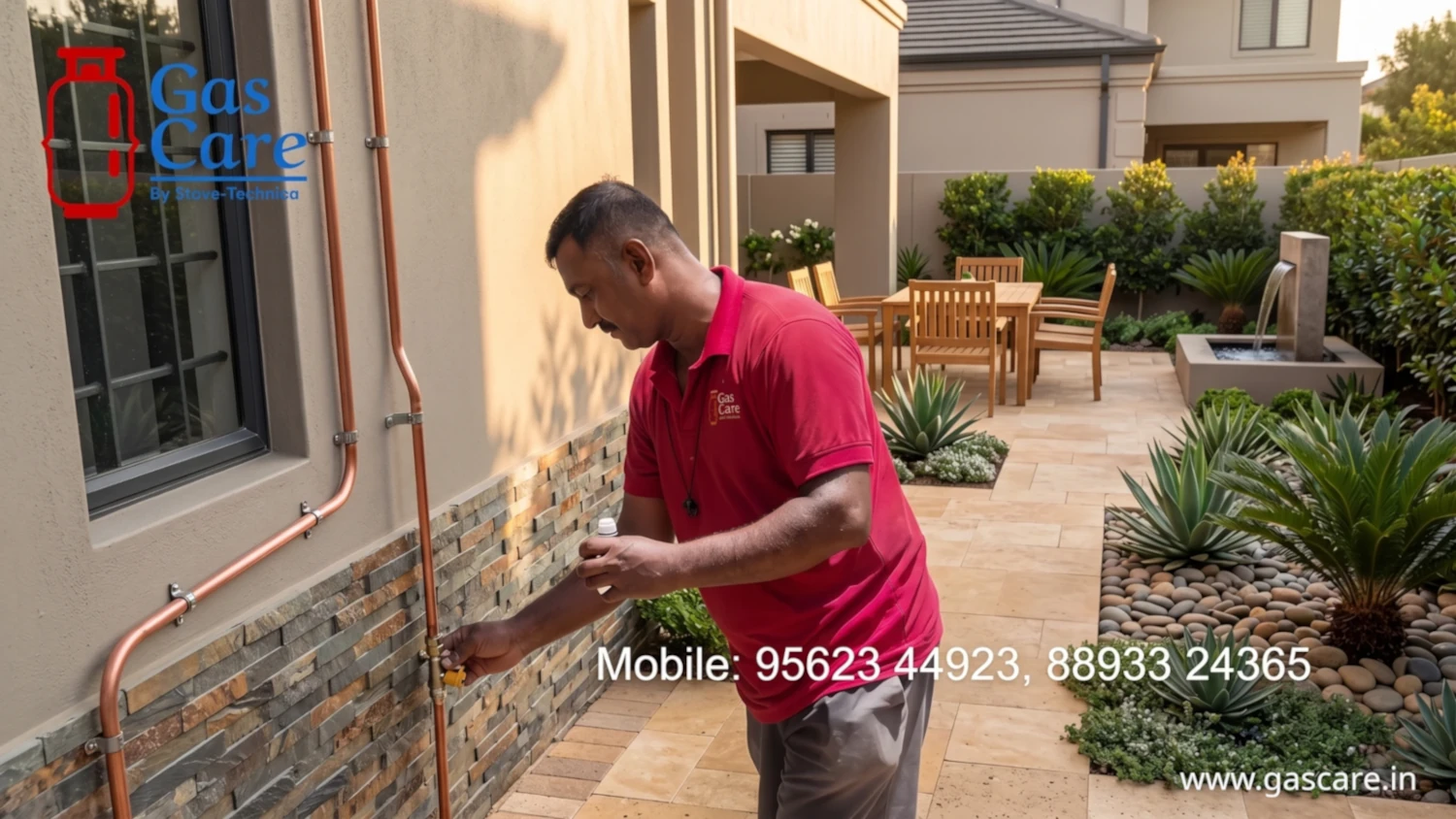
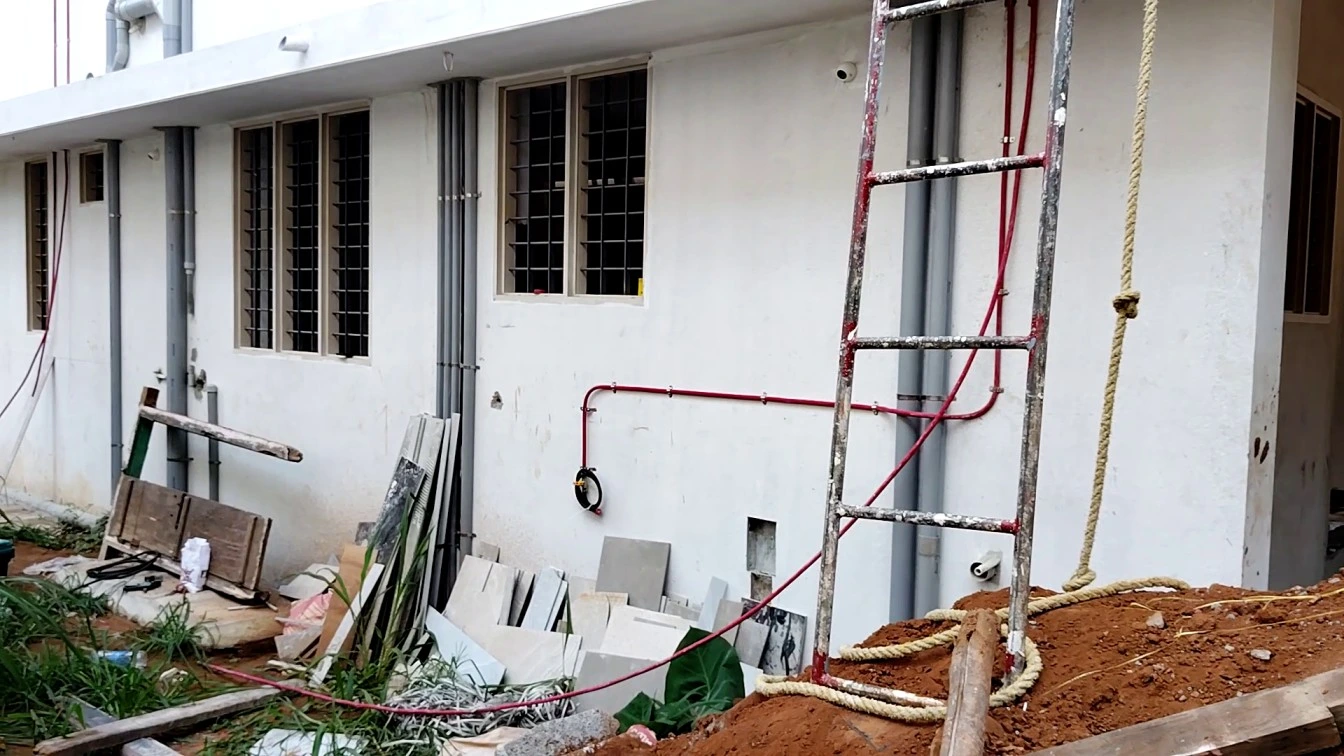
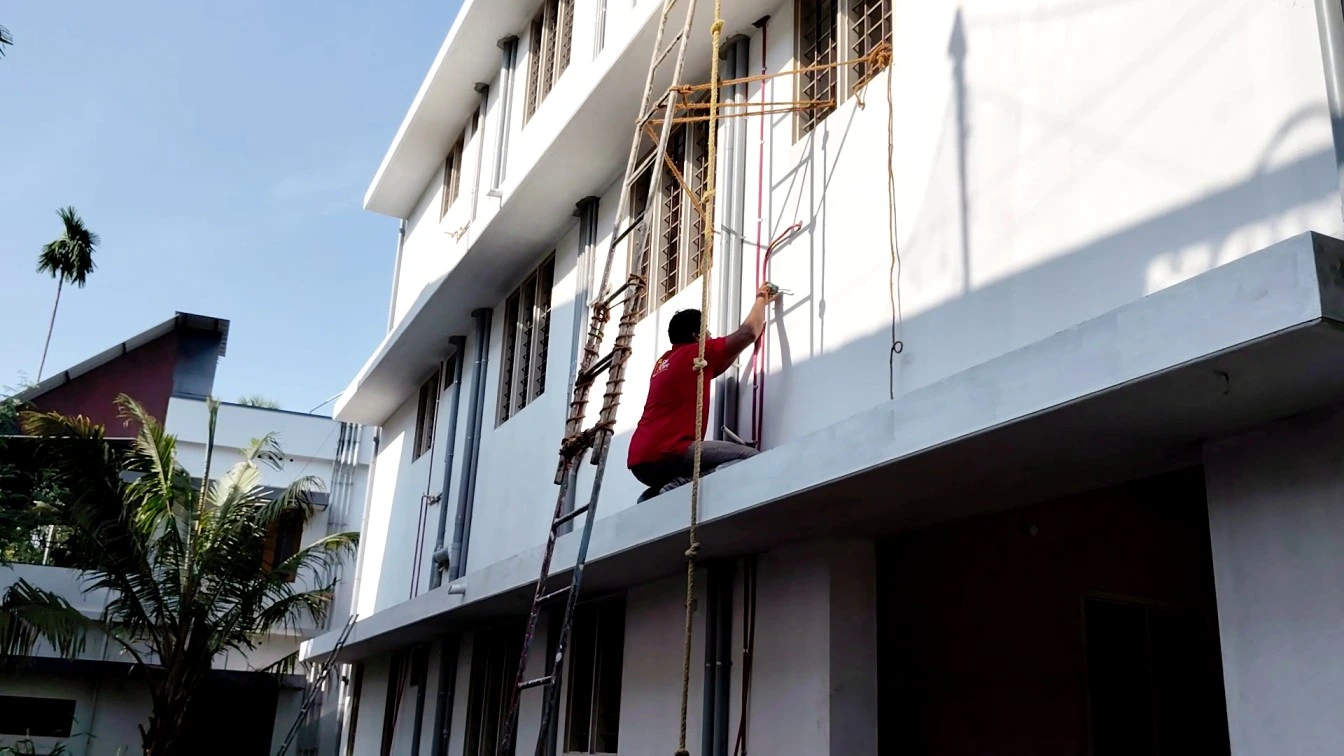
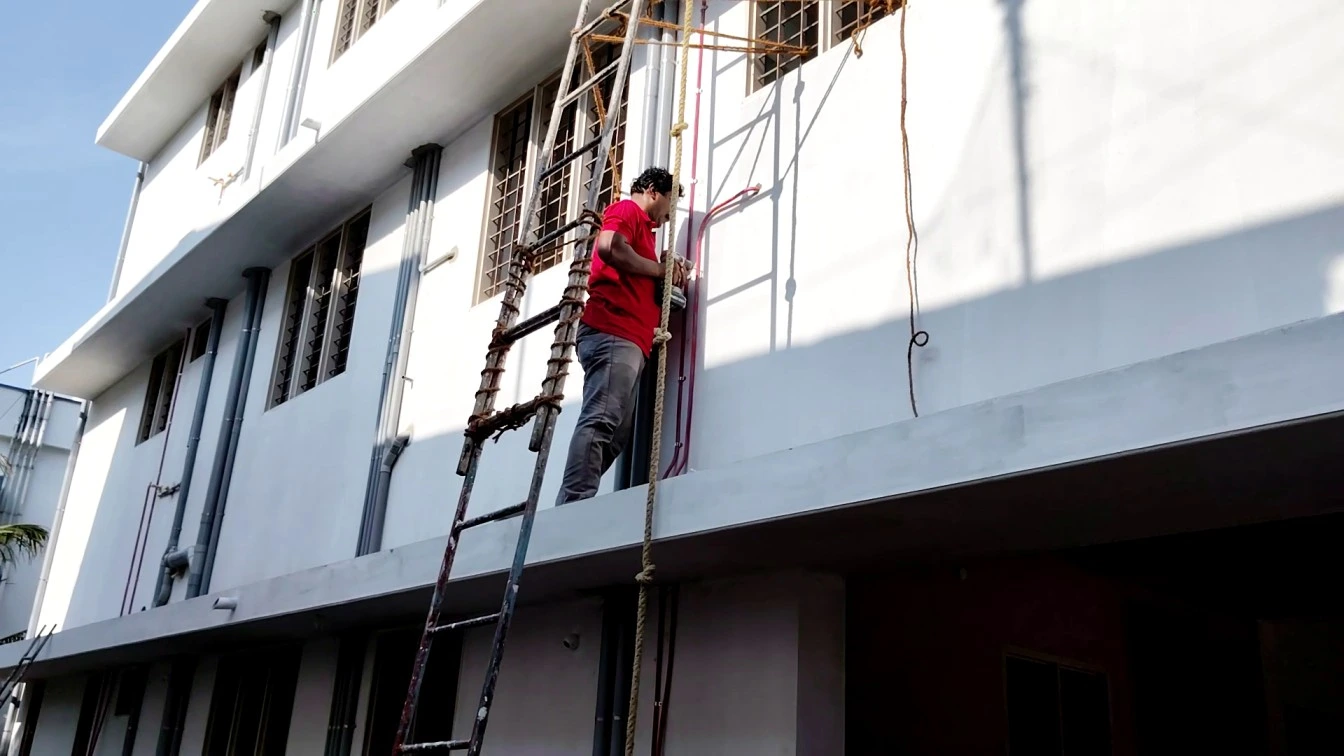
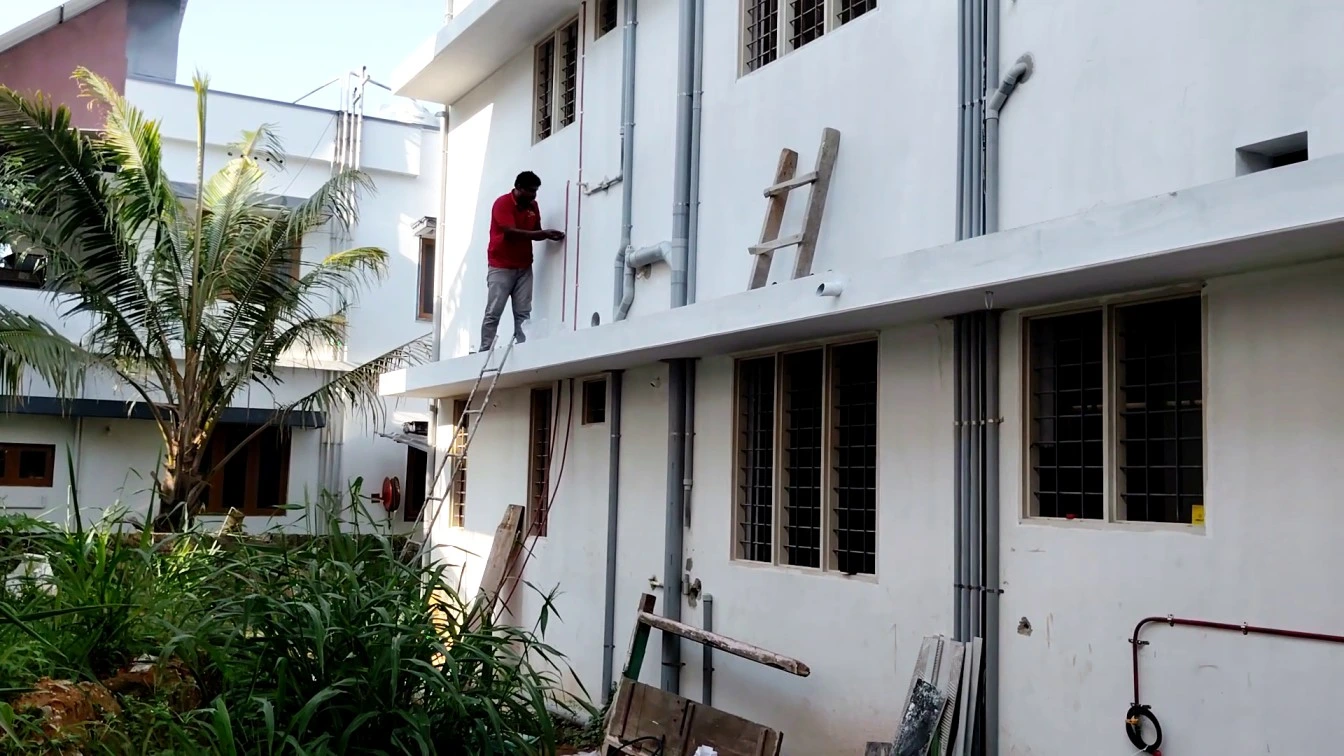
- Exterior Routing: The majority of the pipeline runs along the exterior walls of your home, tightly secured with heavy-duty stainless steel clamps to prevent sagging.
- Surgical Entry: The pipe enters the kitchen through a surgically drilled hole directly behind your cooktop or inside a lower cabinet.
- The Isolation Valve: The only visible element inside your kitchen is a sleek, premium brass isolation valve (the shut-off tap). This is usually mounted discreetly just below the counter level, allowing you to instantly cut the gas supply to the stove with a quarter-turn without ever going outside.
Copper vs. Jindal MLC vs. Rubber Hose: The Ultimate Comparison
When upgrading your home’s gas infrastructure, understanding the exact differences in material capabilities is crucial. Here is how the industry standards stack up against the outdated rubber hose:
| Feature | Rubber “Suraksha” Hose | Brazed Copper Pipe | Jindal MLC (Composite) |
| Rodent Resistance | ❌ Zero (Highly Vulnerable) | ✅ 100% Rat-Proof | ✅ 100% Rat-Proof (Aluminum Core) |
| Lifespan | 2 to 3 Years | 50+ Years (Generational) | 40+ Years |
| Installation Method | Manual push & clamp | High-Heat Welding/Brazing | Heat-Free EZ-Fit Crimp |
| Flexibility | High | Rigid (Requires elbow joints) | High (Bends without joints) |
| Best Application | Temporary/Outdated setups | New luxury villas & construction | Furnished apartments & retrofits |
The Secret to Uninterrupted Cooking: The Auto-Switchover System
While moving the cylinder outside guarantees safety, how do you manage gas refills without walking outside every time the flame dies? The answer lies in the Dual-Cylinder Automatic Switchover Manifold.
A professional Gas Care installation upgrades your outdoor cage to hold two cylinders simultaneously (one active, one reserve). These are connected to a smart, central regulator valve.
- How it works: You are cooking a massive feast for a family gathering, and your active cylinder runs dry. Instead of your stove shutting off, the switchover regulator instantly detects the pressure drop and automatically opens the valve to the full reserve cylinder.
- The Result: Your cooktop flame does not even flicker. A small indicator on the outdoor valve turns red, alerting you to order a refill for the empty cylinder, while you continue cooking seamlessly on the reserve.
Navigating Apartment RWA Approvals and Fire Safety Codes
If you live in a high-rise apartment or a gated community in Kerala, you are likely subject to strict Resident Welfare Association (RWA) guidelines regarding structural modifications and fire safety.
A common concern is whether an RWA will allow a private gas pipeline installation. The reality is that modern RWAs actively mandate these upgrades. Storing a high-pressure LPG cylinder on the 10th floor is a massive fire liability for the entire building.
By utilizing the Jindal MLC system, Gas Care ensures rapid RWA approval because the installation is entirely heat-free. There is no open-flame welding, brazing, or heavy construction required inside your flat. The system’s components strictly correspond to the local standards, ensuring that your modular kitchen is not only aesthetically pleasing but also safe.
The Gas Care Expert FAQs: Engineering & Safety
When upgrading from a high-risk indoor cylinder to a permanent outdoor pipeline, homeowners and architects often have specific technical and logistical questions. Here are the definitive answers from the certified engineers at Gas Care:
Q: Why can’t I just buy a “premium” steel-braided rubber hose instead of metal pipes?
A: Even the highest-grade rubber hoses are fundamentally vulnerable to the kitchen environment. Ambient heat degrades rubber over time, making it brittle. More importantly, no rubber hose is truly 100% rodent-proof against aggressive pests like bandicoots. A fixed metal pipeline (Copper or Jindal MLC) completely eliminates these vulnerabilities, providing a structural, multi-generational safety solution rather than a temporary fix.
Q: Between Brazed Copper and Jindal MLC, which material is best for my home?
A: It depends entirely on your project stage:
- For New Constructions / Villas: Brazed copper is the gold standard. It is installed before plastering, offers unmatched fire resistance, and lasts the lifetime of the building.
- For Furnished Apartments / Kitchen Retrofits: Jindal MLC is the champion. Because it uses a heat-free crimping system, we can install it cleanly in a finished modular kitchen without the fire hazards of open-flame brazing. Its flexibility also means fewer joints and faster installation.
Q: Will thick metal gas pipes ruin the look of my new modular kitchen?
A: Not at all. A professional installation is designed to be virtually invisible inside your home. The main pipeline is routed along the exterior walls of your house. It only enters the kitchen through a surgically drilled hole directly behind your cooktop or inside a lower base cabinet. The only visible component is a sleek, premium brass isolation valve (shut-off tap) mounted discreetly for emergency access.
Q: Do I need permission from my Gas Agency (Indane, HP, Bharat Gas) or my apartment RWA?
A: Gas agencies actively encourage the use of outdoor cylinders because it aligns with their utmost safety protocols, provided the installation uses BIS-certified materials (which we exclusively use). For apartment dwellers, Resident Welfare Associations (RWAs) overwhelmingly approve and often mandate these upgrades, as removing high-pressure cylinders from individual flats drastically lowers the fire risk for the entire building.
Q: What kind of maintenance does a permanent gas pipeline require?
A: Unlike rubber hoses which must be replaced every 2 to 3 years, a fixed metal pipeline requires virtually zero maintenance. The only ongoing maintenance involves checking the primary pressure regulator attached to your cylinder (which has a 5-year mechanical lifespan) and occasionally performing a simple soap-water test on the cylinder connections after a refill.
Q: If I have a heavy-duty “Work Area” and a “Main Kitchen,” do I need two separate cylinder cages outside?
A: No. Our systems are highly scalable. We install a single, high-capacity centralized gas cage (holding 2 or 4 cylinders) and precisely engineer the piping to split and route the gas to multiple cooktops. Advanced pressure regulators ensure that both kitchens receive a steady, identical flow of gas, even if both stoves are operating at maximum capacity simultaneously.
People Also Ask (PAA) – Quick Expert Answers
Can we keep the LPG gas cylinder outside the house?
Yes, and it is highly recommended by safety experts and architects. Keeping the high-pressure LPG cylinder in a secure, ventilated outdoor cage completely prevents the dangerous accumulation of gas inside your kitchen in the event of a leak. Because LPG is heavier than air, an outdoor leak harmlessly dissipates into the breeze, drastically reducing the risk of an explosion.
Which pipe is best for a home LPG gas line?
For residential installations, the two best materials are Brazed Copper and Jindal Multi-Layer Composite (MLC). Copper is the architectural gold standard for new constructions due to its permanent, fire-resistant, and rust-proof nature. Jindal MLC (PE-AL-PE) is the modern champion for existing kitchens; it is highly flexible, 100% rust-proof, and can be installed without any open-flame welding inside your home.
Is it safe to conceal a gas pipe inside a kitchen wall?
Yes, but only if you use the correct material. Concealing gas lines is safe when using continuous, highly flexible piping like Jindal MLC, which allows the pipe to be routed through the wall with absolutely zero hidden joints. Because joints are the primary source of gas leaks, a joint-free line hidden behind your kitchen tiles is structurally secure and code-compliant.
Can rats bite through Jindal composite gas pipes?
No. While rodents are notorious for chewing through the standard orange rubber “Suraksha” hoses—causing severe indoor leaks—they cannot penetrate professional gas lines. Jindal MLC pipes feature a solid, diffusion-tight aluminum core sandwiched between the plastic layers, making them completely 100% rodent-proof and safe from pest damage.
How much does it cost to install an outdoor gas pipeline in India?
A standard professional residential gas pipeline installation generally ranges between ₹8,500 and ₹15,000. This covers the outdoor cylinder manifold, an automatic dual-cylinder switchover regulator, premium copper or composite piping, the indoor isolation valve, and certified labor. It is a highly cost-effective, one-time investment that permanently protects your expensive modular kitchen from cylinder damage.
The Final Verdict
The transition from an indoor cylinder to an engineered outdoor pipeline is the hallmark of a modern, safety-conscious home. It is a one-time structural investment that protects your family from catastrophic leaks, reclaims your expensive modular storage space, and preserves your premium interior finishes from daily wear and tear.
Whether you are laying the foundation for a new build in Thrissur or upgrading an existing apartment, removing the high-pressure cylinder from your living space is the single most important utility upgrade you can make in 2026.
Secure Your Home Today
Don’t wait for a rubber hose to fail. Bring your kitchen up to modern safety standards. Contact the certified engineers at Gas Care by Stove-Technica for a comprehensive safety audit, personalized routing plan, and a transparent quotation.
Ready to transform your home with a superior, professionally installed Gas Pipe Line?
Contact us today for a free consultation.
Explore Our Work
Don’t just take our word for it—see the quality of our installations for yourself. Our portfolio showcases a variety of residential and commercial projects, demonstrating our commitment to precision, safety, and a flawless finish.
Connect with Gas Care on social media.
Questions? Talk to an Expert
Have questions or need assistance? Our expert team is ready to help. Get in touch with us, and we will provide the support and information you need to make the best decision for your home.